

What everybody should know
Here is what I wish to disseminate to everybody who may be at risk, to those who have survived a suicidal crisis, but also to people who so far have never even considered suicide for themselves.
1
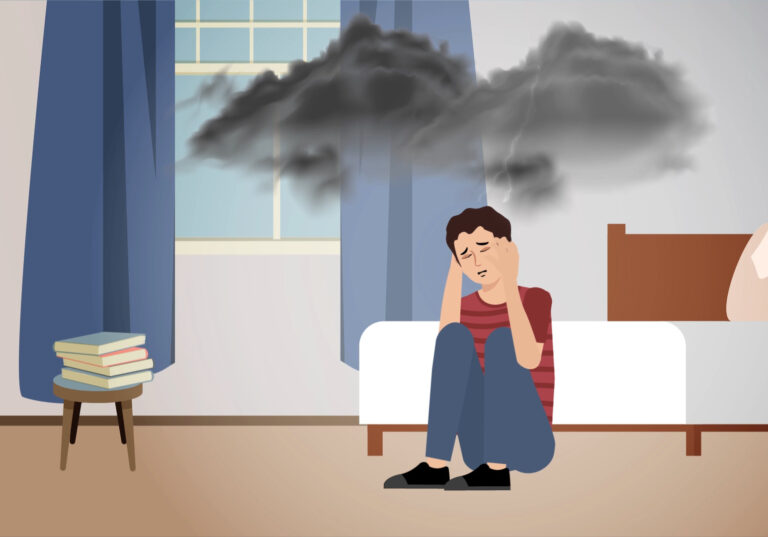
In emotionally difficult situations, when faced with an impasse for which we see no solution, it is not uncommon to develop thoughts of suicide as an option. Fortunately, it usually is a long way from suicide thought to suicide action. But, still, you should know that when emotional stress increases, our brain may trick us into believing that suicide is the only solution.
2
You should know that mental pain can grow into an extremely unpleasant and disturbing sensation. It can create catastrophic thinking – “it will never subside, it will even get worse”.
3
Everybody should know that the situation may escalate and become life-threatening, when the emotional stress increases, and when mental pain becomes unbearable. Suicide risk is high when we develop concrete plans how to end our own live, and when we start believing that others (family, friends) would be better off without us.
Withdrawing into our narrowed-in world and pretending that everything is ok is another serious warning sign.


4
Everybody should know that in such moments, our brain is subject to losing the capacity to think rationally. In the alarm mode, our rational thinking and problem-solving capacities are largely abolished. Some researchers have used the term “cognitive myopia”, meaning an extreme short-sightedness in our thinking, not allowing any other considerations. The emotional brain takes over, driving us toward an immediate solution to end the unbearable and existentially threatening mental state. In brief: In highly stressful situations we cannot trust our brain to act in our interest.
5
And, everybody should know that from the stories of people who survived, we must assume that the vast majority of people who die by suicide would regret in retrospect what they did. This is illustrated by people who jump from bridges and survive, saying that seconds after they had jumped, they realized that what they just had done was a wrong action.

Suicide is not an illness: The story behind it.
6
And, finally, you must know that suicide is far from being inevitable. We can learn to become aware of these dangerous developments and to know what to do about it to be safe. The ASSIP study speaks a clear language: From 120 patients who had attempted suicide, in 24 months follow-up 5 suicide attempts happened in the ASSIP-treated group, 41 attempts in the control group. The explanation is that in only three therapy sessions people had developed their personal warning signs and safety strategies (here you can find more information about ASSIP).
You, too, can learn how to be safe in emotionally challenging situations.
Read more about the new approach to suicide in the book by Konrad Michel.